Senolytics
Senolytics fisetin and quercetin explained and compared
Senolytics aim to clear senescent 'zombie' cells. Here is the honest state of the evidence for fisetin and quercetin — strong in mice, still early in people.
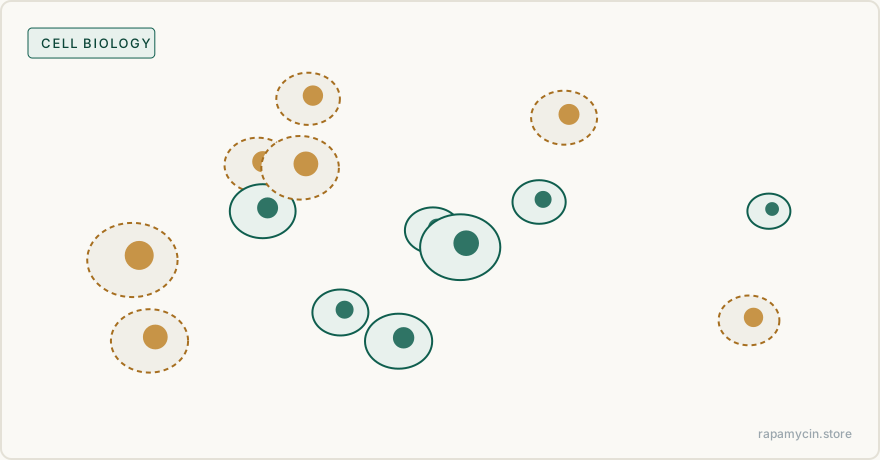
Senescent cells accumulate as we age. They stop dividing but resist dying, and they leak a mix of inflammatory signals that can damage neighbouring tissue. Senolytics are the class of compounds designed to remove them. On our longevity evidence desk this is one of the more genuinely interesting mechanisms — and also one where marketing runs well ahead of the human data.
What senolytics actually are
A senolytic is not an antioxidant or a general "anti-aging" supplement. The specific job is to nudge senescent cells into finally dying so the immune system can clear them. The design logic that has support in animals is intermittent dosing: hit the cells hard for a short window, then stop, rather than continuous daily exposure. That distinction matters, because most products are sold for daily use — a schedule the senolytic evidence does not support.
The animal evidence is the real strength
Fisetin, a flavonoid found in strawberries and other plants, cleared senescent cells and extended both health and lifespan in mice.[1] Separately, the combination of dasatinib plus quercetin (often written "D+Q") improved physical function and increased lifespan in aged mice.[2] Note the pairing: quercetin's headline senolytic result came alongside a prescription drug, not on its own.
Strong in mice · early in humansWhat the first human data shows
The most-cited human result is a small first-in-human trial of dasatinib plus quercetin, which reported a reduction in senescent-cell markers in patients.[3] It is important to read this honestly: the trial was tiny and short, and it measured cellular markers, not lifespan or hard health outcomes. It is a proof-of-concept that senolytics can shift a biomarker in people — not evidence that they help you live longer or better.
First human trials onlyFisetin vs quercetin vs quercetin + bromelain
Quercetin has enormous search volume, but most of it reflects allergy and immune-support intent, a use separate from longevity.[4] As a senolytic, quercetin alone is the weakest of the three approaches; in the strongest studies it works as dasatinib's partner. Fisetin is the flavonoid with the best standalone preclinical senolytic case. "Quercetin + bromelain" is a formulation choice — bromelain is added to aid absorption — not a stronger evidence base.
| Product | Evidence | Typical dose | 3rd-party tested | Best for | Not for | Price band | Link |
|---|---|---|---|---|---|---|---|
| Fisetin | Early / mixed evidence | Intermittent bursts (protocol-dependent, not established) | Not stated | The most-studied standalone consumer senolytic (mouse evidence) | Anyone expecting proven human anti-aging outcomes | $ · budget | |
| Quercetin | Limited evidence | Studied paired with dasatinib, not alone | Not stated | Broad allergy/immune supplement use; senolytic partner to dasatinib | A proven standalone senolytic | $ · budget | |
| Quercetin + bromelain | Limited evidence | Label-dependent | Not stated | Better-absorbed quercetin format | Senolytic evidence beyond quercetin itself | $$ · mid |
Affiliate links. We may earn a commission; it does not change our assessments.
One caution on the D+Q combination: dasatinib is a prescription leukaemia drug, not a supplement. If you ever see it discussed, treat it as a medication that belongs under clinician supervision.
"Hit and run" dosing vs daily-supplement marketing
This is the practical takeaway. The evidence-backed pattern is intermittent, brief, and occasional. There is no evidence that swallowing a flavonoid every day clears senescent cells in humans. When a product is marketed for continuous daily "senolytic" use, that is a marketing decision, not a finding. If you are mapping where senolytics sit inside a wider routine, see how we weigh them against other compounds in our rundown of longevity supplements.
Go deeper
- Fisetin benefits and the senolytic evidence
- Cellular senescence and senolytics explained
- How senolytics fit a broader longevity stack
Frequently asked questions
What are senolytics?
Senolytics are compounds meant to selectively clear senescent 'zombie' cells — cells that have stopped dividing but resist dying and leak inflammatory signals. The consumer senolytics people talk about most are the flavonoids fisetin and quercetin.
Is fisetin or quercetin the better senolytic?
Fisetin has the stronger standalone preclinical case: in mice it cleared senescent cells and extended healthspan. Quercetin's senolytic evidence mostly comes from studies where it was paired with the prescription drug dasatinib, not used alone. Neither has proven human anti-aging outcomes yet.
How are senolytics dosed?
The pattern with animal support is intermittent 'hit and run' dosing — short bursts to clear senescent cells, then a break — rather than a daily pill. The optimal human dose and schedule are not established, so treat specific protocols with caution.
Is quercetin just for allergies?
Most quercetin search interest is about allergy and immune support, which is a different use from longevity. As a senolytic, quercetin is best characterised as dasatinib's partner in trials rather than a proven standalone anti-aging supplement.
Do I need a prescription for senolytics?
Fisetin and quercetin are sold as dietary supplements and do not require a prescription. Dasatinib — the drug quercetin is paired with in the strongest senolytic studies — is a prescription cancer medication and is not a supplement.
References
- Fisetin is a senotherapeutic that extends health and lifespan. Yousefzadeh MJ et al. EBioMedicine 2018;36:18–28.
- Senolytics improve physical function and increase lifespan in old age. Xu M et al. Nature Medicine 2018;24:1246–1256.
- Senolytics decrease senescent cells in humans: preliminary report from a clinical trial of dasatinib plus quercetin. Hickson LJ et al. EBioMedicine 2019;47:446–456.Small first-in-human senolytic trial.
- Quercetin — evidence summary. Examine.com.
Own a longevity or health brand?
Rapamycin.store publishes sponsored and guest posts on an aged, topically-relevant domain, and offers display advertising. Tell us what you want to promote and we'll send our current options.