The flagship compound
Rapamycin for longevity: what the evidence actually shows
Rapamycin is the most mechanistically supported longevity candidate we have — and still unproven in healthy humans. Here is the honest picture, trial by trial.
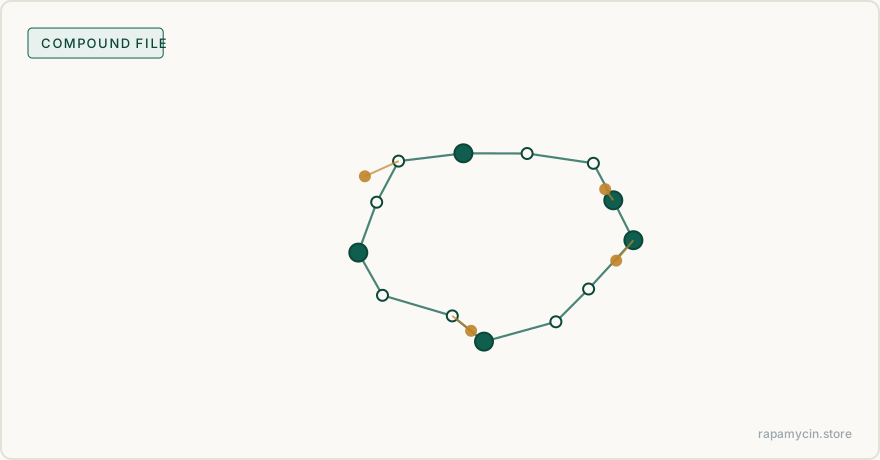
Rapamycin was isolated in 1975 from a soil bacterium found on Easter Island (Rapa Nui), which is where it gets its name.[10] It is approved to prevent organ-transplant rejection, to coat coronary stents, and to treat a rare lung disease.[14] Its longevity reputation comes from a single, well-replicated fact: in mice, it extends life.
That one fact has been doing an enormous amount of work in public conversation — often more than it can bear. This page separates the parts that are settled from the parts that are not, and shows you the actual human trials rather than a summary of a summary.
What rapamycin is, precisely
Rapamycin is a macrolide produced by Streptomyces hygroscopicus.[15] Its generic drug name is sirolimus; the two words describe the same molecule. Everolimus and temsirolimus are chemically modified relatives known as rapalogs — used in oncology and in several of the human ageing trials below — and they are not interchangeable with sirolimus.
Two pharmacological details matter for longevity use. First, sirolimus has an unusually long elimination half-life — roughly 62 hours in healthy adults — which is the reason a once-weekly schedule is even coherent.[14] Second, it is metabolised by CYP3A4, so it interacts with a long list of common drugs and with grapefruit juice, which is one of several reasons this belongs under a prescriber's supervision.
How rapamycin works in the body
Rapamycin binds a small intracellular protein called FKBP12, and that complex inhibits mTOR (mechanistic target of rapamycin), a master regulator of cell growth.[12] mTOR exists in two complexes. mTORC1 is acutely rapamycin-sensitive and drives protein synthesis, ribosome production and nutrient storage. mTORC2 is not acutely inhibited, but chronic exposure disrupts it too — and mTORC2 disruption is thought to explain the insulin resistance and glucose intolerance seen with continuous high-dose use.[1]
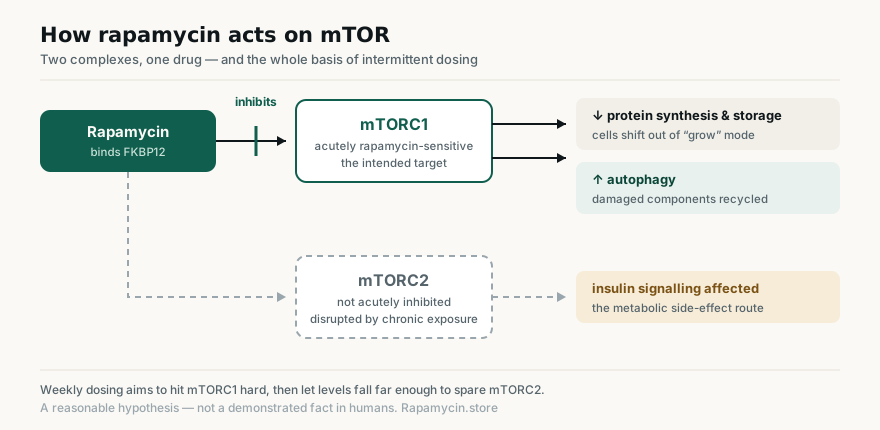
That distinction is the whole basis of longevity dosing. Dialling mTORC1 down shifts cells from "grow and store" toward "repair and recycle," including autophagy, the process by which cells clear out damaged components. The intermittent-dosing theory is that you can hit mTORC1 hard enough to matter, then let levels fall far enough that mTORC2 is spared. It is a reasonable hypothesis. It is not a demonstrated fact in humans.
The animal evidence is genuinely strong
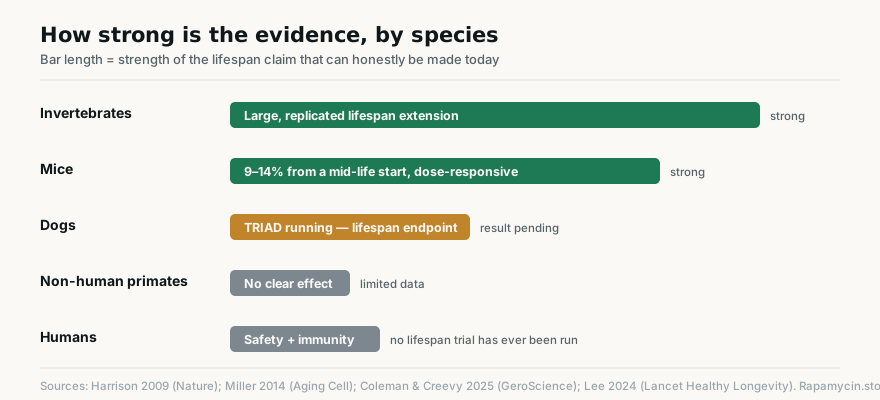
The landmark result came from the NIA Interventions Testing Program: rapamycin extended the lifespan of genetically diverse mice by roughly 9–14% even when started at 20 months of age — the mouse equivalent of late middle age.[3] That finding has held up better than almost anything else in the field, and three features of the follow-up work are worth knowing.
It is dose-responsive. Raising the dose produced larger lifespan gains, and the metabolic signature was distinct from dietary restriction — meaning rapamycin is not simply mimicking eating less.[4] It is sex-dependent. Female mice have generally shown larger gains than males across ITP cohorts.[4] And it may not need to be continuous: a three-month course given to middle-aged mice produced lasting lifespan and healthspan benefits after treatment stopped.[5] That last result is the strongest published argument for intermittent human protocols, and it comes from mice, not people.
Beyond rodents, invertebrates show even larger effects, and some primate work has shown no clear lifespan effect. This is the crux: the mouse case is strong, the translation to humans is unresolved.[16]
Every human trial, and what each one actually measured
This is the section most rapamycin coverage skips. There is no human lifespan trial. What exists is a short list of small-to-moderate studies, most of which measured immune function, safety or biomarkers over weeks to a year. Here they are in full.
| Trial | Drug & dose | Size / length | What it found |
|---|---|---|---|
| Mannick 2014[7] | RAD001 (everolimus), low dose | Elderly volunteers · 6 weeks | Improved influenza-vaccine response by about 20%; reduced PD-1+ T cells. Immune endpoint, not ageing. |
| Mannick 2018[8] | RAD001 + BEZ235 (TORC1-selective) | 264 adults · 6 weeks dosing, 1 year follow-up | Significantly fewer reported infections over the following year (p = 0.001); antiviral gene expression up. |
| Kraig 2018[9] | Sirolimus 1 mg daily | 25 adults aged 70–95 · 8 weeks | Feasible and tolerable; no cognitive or physical change; measurable declines in haemoglobin and other red-cell indices. |
| PEARL 2025[6] | Compounded sirolimus 5 mg or 10 mg weekly | Healthy adults · 48 weeks | Safety comparable to placebo. Primary endpoint (visceral fat) unchanged. Lean mass and self-reported pain improved in women on 10 mg. |
| Lancet review 2024[2] | Rapamycin + rapalogs, pooled | Systematic review | Some immune, cardiovascular and skin measures improved; no lifespan claims supported. |
| Ongoing (UT Health)[11] | Sirolimus, low intermittent | Larger, longer, older adults | Running now. Results pending — this is the class of trial that could actually move the answer. |
Trials are grouped by what they measured, not by how they were reported. Note that PEARL's authors are employees and shareholders of the telehealth company that ran it — a declared conflict that does not invalidate the data but does belong in your reading of it.
Read the table as a whole and a pattern appears. The clearest human signal is immunological: two independent trials found that brief mTOR inhibition improved vaccine response and reduced infection rates in older people.[7,8] That is a real, replicated, clinically meaningful finding — and it is not the same claim as "slows ageing." The longest and most-cited longevity-specific trial, PEARL, missed its own primary endpoint: visceral fat did not change.[6] Its honest conclusion was about safety, not efficacy.
A 2025 review asking directly what clinical evidence supports off-label use in healthy adults reached the same place: the safety data are reassuring at low intermittent doses, and the efficacy data for healthy-adult longevity are thin.[10]
Side effects, by dose
Almost every argument about rapamycin's safety is really an argument about dose. Separating the two makes the picture much clearer.
| Setting | Typical schedule | Reported effects |
|---|---|---|
| Transplant / immunosuppression | Daily, blood-level targeted | Mouth ulcers (stomatitis), low blood counts, raised cholesterol and triglycerides, insulin resistance, impaired wound healing, higher infection risk; effects on menstrual and ovarian function in some studies.[1] |
| Research dosing in older adults | 1 mg daily, 8 weeks | Tolerable; stomatitis and GI complaints in a minority; statistically significant drops in haemoglobin, haematocrit and red-cell indices without clinical events at that length.[9] |
| Off-label longevity dosing | 5–10 mg once weekly | Adverse-event rates similar to placebo over 48 weeks; blood biomarkers stayed within normal ranges.[6] Canker sores are the most commonly reported nuisance effect. |
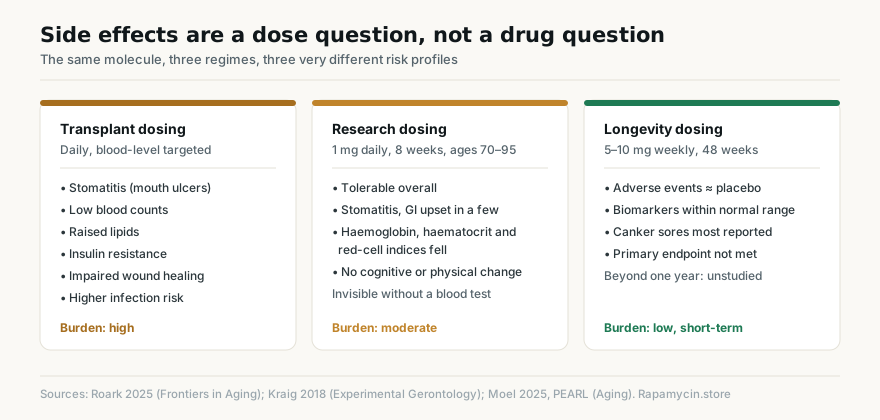
The pattern is consistent: the frightening side-effect profile belongs to continuous immunosuppressive dosing, and it substantially softens at weekly dosing. What has not been established is what happens over five or ten years of weekly dosing, because no one has run that study. Absence of harm in a 48-week trial of a few hundred people is not the same as long-term safety.
Who should not be taking it
Off-label use is a prescriber's decision, and there are situations where the risk-benefit is clearly unfavourable regardless of how interested you are in longevity:
- Active infection, or a history of recurrent serious infection — you are dampening an immune pathway.
- Pregnancy, trying to conceive, or breastfeeding.
- Upcoming surgery or a healing wound — impaired wound healing is a documented effect.[1]
- Existing immunosuppression from disease or medication.
- Interacting medications metabolised through CYP3A4, including several antifungals, macrolide antibiotics and some seizure medications.
- Poorly controlled lipids or blood sugar — both are worth monitoring on-treatment rather than assuming.
The dosing debate
Off-label longevity protocols cluster around 5–7 mg once weekly, sometimes cycled with breaks, and the PEARL trial's 5 mg and 10 mg weekly arms are the closest thing to a tested version of that idea.[6] The rationale is the mTORC1/mTORC2 separation described above, plus the mouse result showing that a limited course can produce durable benefit.[5]
Three honest caveats. The optimal anti-ageing dose and schedule are not established. There is no validated biomarker that tells you whether your dose is hitting the intended target — trough blood levels tell you about exposure, not about ageing. And the mouse dose-response data point the other way from the human safety instinct: higher doses extended mouse life more.[4] Nobody has reconciled those two facts in a human protocol.
How rapamycin compares with the other candidates
| Compound | Mouse lifespan effect | Human evidence | Access |
|---|---|---|---|
| Rapamycin | Consistent, 9–14% mid-life start[3] | Safety + immune function only | Prescription |
| Metformin | Inconsistent; not replicated in ITP | Large diabetes evidence base; TAME not yet run | Prescription |
| NAD precursors (NMN/NR) | No lifespan extension shown | Raises NAD+; functional outcomes unclear | Supplement |
| Senolytics | Health and lifespan gains in mice | Small first-in-human trials only | Supplement / experimental |
| Spermidine | Modest gains; autophagy-linked | Observational cohorts | Supplement / food |
Nothing on this list has been shown to extend human lifespan. The column that separates rapamycin from the rest is the mouse column — and the column that separates it from being an answer is the human one.
Cost, access and the grey market
Sirolimus is off-patent, and generic tablets are inexpensive relative to most longevity spending — the meaningful costs are the prescriber and the monitoring, not the drug. Weekly dosing also stretches a month's supply a long way. The full breakdown, including what telehealth clinics actually charge and what bloodwork is worth doing, is on our rapamycin cost and access page.
One warning worth stating plainly: research-chemical sellers marketing "rapamycin powder" without a prescription are outside any quality system. Purity, dose accuracy and identity are unverifiable, and for a drug with a 62-hour half-life and real immune effects, that is not a small gamble. We do not link to them.
The dog trial is the result to watch
The most informative rapamycin study currently running may not be in humans at all. TRIAD — the Test of Rapamycin in Aging Dogs — is a double-masked, placebo-controlled, multicentre trial in healthy middle-aged companion dogs, and it is the first rigorous test of a drug against biological ageing with lifespan and healthspan as endpoints conducted outside a laboratory in any species.[13] Dogs share our homes and environment, get many of the same age-related diseases, and age faster than we do, so the answer arrives sooner. Details are on our rapamycin for dogs page.
What would change our assessment
Being specific about this is more useful than another round of "more research is needed." Three results would move this page:
- A hard-endpoint human trial. Mortality, incident age-related disease, or validated functional decline in older adults — not visceral fat, not a methylation clock. The larger trials now enrolling are the first of this shape.[11]
- A positive TRIAD readout. A lifespan or healthspan effect in ordinary pet dogs would be the strongest cross-species evidence short of a human trial.[13]
- A validated target-engagement biomarker. Something that tells an individual whether their dose is doing the intended thing. Without it, personalised dosing is guesswork with a blood-level readout attached.
Equally, we would revise downward if long-term weekly dosing produced a clear signal of metabolic harm, or if the larger trials replicated PEARL's null on their primary endpoints.
Where this leaves you
If you take one thing from this page: rapamycin is the compound with the best mechanistic and animal case for slowing ageing, and simultaneously the one where over-claiming is easiest. Treat "reliable in mice, tolerable at low weekly doses in early human trials, with a replicated immune benefit in older adults" as the ceiling of what can honestly be said today. That is a genuinely interesting ceiling. It is not a lifespan claim, and anyone selling it to you as one is ahead of the evidence.
Anyone considering it should do so with a qualified clinician who will monitor lipids, glucose and blood counts — not with a checkout button.
Go deeper
- What is rapamycin — a plain-language primer
- Rapamycin side effects by dose and schedule
- Rapamycin dosage for longevity
- How rapamycin works and the mTOR pathway
- Rapamycin vs metformin
- Topical rapamycin and rapamycin cream
- Rapamycin cost and how people access it
- Rapamycin for dogs and the Dog Aging Project
Frequently asked questions
Is rapamycin available to the public?
Not over the counter. Rapamycin (sirolimus) is a prescription-only drug. People who use it off-label for longevity get it through a licensed physician or a regulated telehealth clinic. We do not sell it and we do not help you buy it another way.
What is the downside of rapamycin?
Dose-dependent side effects. At the high daily doses used for immune suppression it can cause mouth ulcers, low blood counts, raised lipids and infection risk. Even low intermittent doses have been linked to lipid changes and, in some studies, red-cell index changes. There is also no proven human lifespan benefit yet.
What is a natural alternative to rapamycin?
There is no food or supplement that reproduces rapamycin's direct mTOR inhibition. Compounds sometimes discussed as gentler autophagy nudges include spermidine, and the practice of periodic fasting, but their evidence base is different and much weaker for lifespan outcomes.
Can you get rapamycin from food?
No. Rapamycin is a macrolide produced by the soil bacterium Streptomyces hygroscopicus. It does not occur naturally in foods.
Does rapamycin extend human lifespan?
This has not been proven. Rapamycin reliably extends lifespan in mice (roughly 9–14% when started mid-life), but human trials so far — including the 48-week PEARL trial — show that low intermittent dosing is tolerable with modest changes on some measures, not that people live longer.
What dose of rapamycin do people take for longevity?
Off-label longevity protocols typically use a low weekly dose rather than the daily dosing used in transplant medicine. The PEARL trial tested 5 mg and 10 mg once weekly for 48 weeks. There is no established optimal anti-ageing dose, and dosing should be set by a prescribing clinician, not copied from the internet.
How long does rapamycin stay in your system?
Sirolimus has a long elimination half-life — on the order of about 62 hours in healthy adults — which is the pharmacological reason weekly dosing is even plausible. Blood levels rise and fall between doses instead of being held constant, which is the point of intermittent schedules.
Who should not take rapamycin?
Anyone with an active infection, anyone who is pregnant or trying to conceive, anyone who is immunocompromised, and anyone awaiting surgery or with poor wound healing should not be taking it off-label. It also interacts with common drugs metabolised by CYP3A4 — including some antifungals, antibiotics and grapefruit juice. This is a prescriber's decision, not a personal one.
Is rapamycin the same as sirolimus?
Yes. Sirolimus is the generic drug name; rapamycin is the original name given after Rapa Nui (Easter Island), where the producing bacterium was found. Everolimus and temsirolimus are related compounds known as rapalogs, and they are not interchangeable with sirolimus.
What would prove rapamycin works in humans?
A large, long, placebo-controlled trial in healthy older adults with hard clinical endpoints — mortality, incident disease, or validated functional decline — rather than biomarkers. Trials of that shape are only now starting, so an honest answer today is that the human question remains open.
References
- Rapamycin for longevity: the pros, the cons, and future perspectives. Roark KM, Iffland PH. Frontiers in Aging 2025;6:1628187.Peer-reviewed review, cited 31 times.
- Targeting ageing with rapamycin and its derivatives in humans: a systematic review. Lee DJW et al. The Lancet Healthy Longevity 2024.Systematic review, cited 189 times.
- Rapamycin fed late in life extends lifespan in genetically heterogeneous mice. Harrison DE et al. Nature 2009;460:392–395.9–14% mouse lifespan extension started mid-life.
- Rapamycin-mediated lifespan increase in mice is dose and sex dependent and metabolically distinct from dietary restriction. Miller RA et al. Aging Cell 2014;13(3):468–477.Higher doses produced larger lifespan gains; effect size differs by sex.
- Transient rapamycin treatment can increase lifespan and healthspan in middle-aged mice. Bitto A et al. eLife 2016;5:e16351.A 3-month course in middle age produced lasting lifespan gains.
- Influence of rapamycin on safety and healthspan metrics after one year: PEARL trial results. Moel M et al. Aging (Albany NY) 2025;17(4):908–936.48-week RCT, 5/10 mg weekly; safe, no visceral-fat change; authors employed by AgelessRx — note conflict.
- mTOR inhibition improves immune function in the elderly. Mannick JB et al. Science Translational Medicine 2014;6(268):268ra179.RAD001 (rapalog) improved influenza-vaccine response ~20% in older adults.
- TORC1 inhibition enhances immune function and reduces infections in the elderly. Mannick JB et al. Science Translational Medicine 2018;10(449):eaaq1564.Phase 2a, n=264; significant reduction in reported infections over one year (p=0.001).
- A randomized control trial to establish the feasibility and safety of rapamycin treatment in an older human cohort. Kraig E et al. Experimental Gerontology 2018;105:53–69.n=25, aged 70–95, 1 mg daily 8 weeks; tolerable, but measurable red-cell index changes.
- What is the clinical evidence to support off-label rapamycin therapy in healthy adults?. Hands SL, Lustgarten MS, Frame AA, Rosen CJ. Aging (Albany NY) 2025.
- Large rapamycin clinical trial launches at UT Health San Antonio. UT Health San Antonio.
- mTOR Signaling in Growth, Metabolism, and Disease. Saxton RA, Sabatini DM. Cell 2017;168(6):960–976.
- Test of Rapamycin in Aging Dogs (TRIAD): study design and rationale. Coleman AE, Creevy KE et al. GeroScience 2025;47(3):2851–2877.Double-masked, placebo-controlled, multicentre; lifespan + healthspan endpoints in companion dogs.
- Sirolimus. Wikipedia.
- Definition of rapamycin. NCI Dictionary of Cancer Terms (cancer.gov).
- Rapamycin — topic overview. FoundMyFitness.
Own a longevity or health brand?
Rapamycin.store publishes sponsored and guest posts on an aged, topically-relevant domain, and offers display advertising. Tell us what you want to promote and we'll send our current options.